
Product Categories
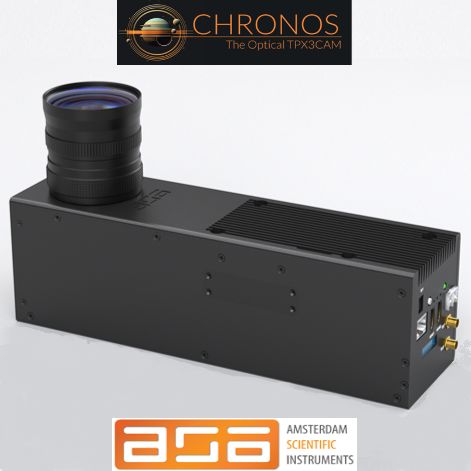
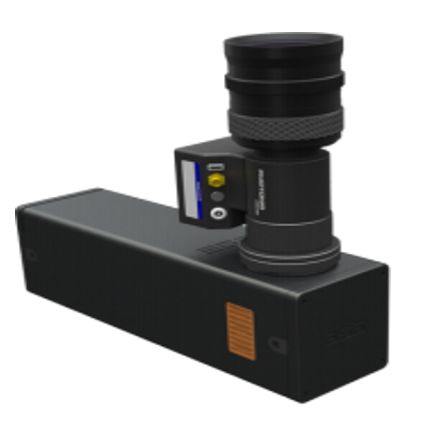
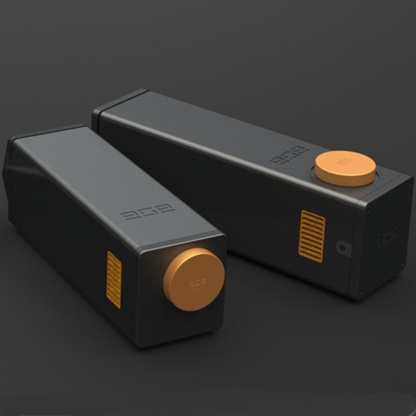
Chronos series ultrafast detection system based on Timepix3
Product Details
Chronos Series of Timepix3-based detection systems
The event- and data-driven detector imaging system produced by Amsterdam Scientific Instruments (ASI) from the Netherlands stands out in scientific research fields such as microparticles, possessing the following unique features:
1) Unrivaled Speed
Experience an unparalleled 1.56 ns time resolution. From this perspective, in a frame-based system, this is equivalent to 600MHz. Our pixel readout system, developed in cooperation with NIKHEF, operates independently for each pixel, thus eliminating dead time and generating nanosecond-level event data records.
2) Event Rate
Capture up to 30 billion bombardments per second, enabling large-field readout of specific states of atomic lattices, quantum correlations in many single-photon interactions, macromolecular imaging analysis, and observation of bright scintillators.
3) Noise-free
Enjoy noise-free detection at room temperature. No external cooling equipment required.
4) Seamless Data Integration
Make your life easier with our flexible API-based control software and GUI for preview. You can script detector operations to fully automate data acquisition and seamlessly integrate with your entire experiment.
Key Features:
Understand the advantages of Timepix3's pixel-by-pixel tracking and timestamped data, which provides unparalleled insights compared to traditional frame-based alternatives.
1) Increased photosensitivity sensor, conversion efficiency >90%
2) Available in various configurations and designs, including front and L-shaped setups, to meet your specific experimental needs
3) Wavelength range: 400-1000nm
4) Event-based detection: continuous real-time operation, up to 800,000 events per second
5) 55μm pixel size. Sub-pixel spatial resolution (< 10 μm) achieved through centroiding.
6) 1.56 ns time resolution, picosecond range achievable with external TDC signal.
7) Simultaneously detect arrival time and intensity for each pixel.
8) Flexible integration via Python API and GUI for rapid visualization and detector control.
Which Chronos series product is best for you?
Application-specific product packages tailored to your needs: Quantum Science Applications 、 Neutron Science Applications 、 VMI and Mass Spectrometry Applications (Coming soon), total of three product categories
1. Quantum Science Applications
● Image Intensifier System
● Wavelength range 200-920nm
● New Data Processing Algorithms
● Accessible ASI Quantum User Community
Due to the event-based nature of Timepix3 technology with nanosecond time-tagging capabilities, you can effortlessly distinguish and eliminate randomly distributed noise in your signal. This brings new clarity and precision to your data analysis, enabling breakthroughs and insights previously hidden in noise.
We understand that transitioning to event-based technology can be significantly different from familiar frame-based methods. We are committed to guiding you through this transition and providing the various levels of support you need to fully leverage the potential of this breakthrough technology.
Single Photon Sensitivity: Through collaboration with partners Photonis' Cricket2 image intensifier package, enabling ultra-fast single-photon detection. Configured with efficient dual MCP and P47 phosphor screen, achieving high magnification and the fastest spectral response on the market.
1) Minimal Dark Count Rate at Room Temperature
Achieve high signal-to-noise ratio (SNR) without long integration times. At room temperature, the dark counts for Hi-QE UV and Green are only 50 Hz/cm2, and for Hi-QE Red, they are 100 kHz/cm2.
2) Fast Time Response Phosphor Screen
Equipped with a P47 phosphor screen, you get the fastest response on the market. Combined with advanced clustering algorithms and time calibration techniques, this detector is enhancing your single-photon research.
3) Achieve Sub-nanosecond Time Resolution
Offers nanosecond gating options, allowing you to combine it with an external TDC for sub-nanosecond timestamping, where the external TDC has a time resolution of 260 picoseconds.
Which product is best for you?
1.1 Phoebe , a single-photon TPX3CAM detector.
● Image Intensifier System
● Wavelength range 200-920nm
● Ultra-fast and comprehensive tpx3 data analysis
Why choose Phoebe?
Because Phoebe helps the quantum photonics academic community to detect, image, and timestamp single photons by...
Eliminate Noise
Phoebe is a hybrid pixel detector that uses sophisticated on-chip electronics for real-time signal processing. Each pixel in Phoebe has its own individual threshold and event counter, enabling noise-free data acquisition. Unlike CCDs, you don't need long experiments to integrate signals to achieve an acceptable signal-to-noise ratio (SNR). Phoebe provides an ultra-high SNR because it only counts and timestamps individual signals, allowing for complex time-resolved data analysis.
Provides Data-Driven Detection
Data is only read out when an event ("hit") occurs on the sensor's surface. This results in a more manageable data load, prioritizing quality over quantity. Compared to traditional CMOS technology, Phoebe eliminates the drawbacks of serial, frame readout such as slow readout, pixel merging, and trailing effects.
Achieve simultaneous data and image acquisition
Phoebe can precisely timestamp data at an astonishing 1.56ns interval. But that's not all - you can seamlessly synchronize external signals via a Time-to-Digital Converter (TDC), boosting time resolution to 260ps. Using this information, you can select time windows within the continuous data to create images.
Easy integration into your experiment
Our API (Serval) and GUI (Accos) facilitate cross-instrument control and data collection. You can configure the TDC to integrate with external hardware such as pulse sources. The acquisition workflow is fully programmable, simplifying data collection.
Plug-and-play solution
Within hours, you'll witness your first data and process it using our dedicated processing toolkit called LUNA (LOgic UNiform Analysis). LUNA is a post-processing software solution developed in collaboration with Timepix-3 technology expert user Peter Svihra. This software suite eliminates the need for extensive programming, giving you a head start and saving your team valuable time.
Single photon detection
Through and images like Photonis' Cricket2 Packaged with image intensifiers, enabling ultra-fast single photon detection.
1.2 Rhea (Coming soon)
● Under development
● Ultrafast feedback quantum error correction (QEC) imaging system
● Suitable for ion traps and atom traps
2. Neutron science applications
● Imaging and scattering solutions
● Hard and soft neutrons (beam energy range)
● Unique super-resolution algorithm
● Small or large area options/access
● Neutron networks
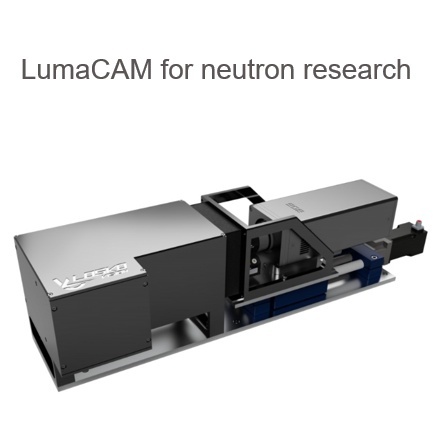
LumaCAM
What is neutron imaging?
In neutron transmission imaging or neutron radiography, neutrons pass through an object to reveal its internal structure. This is very similar to X-ray imaging. Generally, neutrons are complementary to X-rays, and neutrons are often used when X-rays do not provide sufficient penetration for dense materials or when imaging heavy materials in the presence of light materials. However, neutron detection systems are often affected by high background noise inherent in neutron production in various large and small facilities. Conventional camera systems integrate imaging during single neutron exposures and typically do not provide a mechanism to distinguish particles (e.g., neutrons and gamma particles), which is particularly needed for low-flux applications such as energy-resolved neutron imaging or diffraction. ASI and LoskoVision have developed the LumaCAM system, an innovative solution that enables researchers to overcome the limitations of conventional camera systems and utilize neutron counting for imaging. The LumaCAM system provides high-resolution spatial and temporal information for a wide range of neutron applications!
LumaCAM system
The LumaCAM system provides neutron researchers with a complete event-based solution. The system features counting neutron detection, a dedicated light-tight housing, and an adjustable field of view (FoV)
3. VMI and mass spectrometry applications (Coming soon)
● 3D imaging of ions/electrons
● Ideal for VMI
● MS and COLTRIMS
● ToF view with 260ps timestamp
● 80Mhits/s readout speed
● Can operate in daisy-chain mode
It has a Class II qualification for steel structure engineering professional contracting and a Class II qualification for general contracting of building engineering construction; the company's main products include heavy steel, light steel, trusses and purlins, color steel plates and other steel structure products; in recent years, the company has undertaken a series of projects with significant influence, including large-scale structural components, bridges, garages, and standardized factories at home and abroad; products are exported to Belarus, Zambia, Indonesia and other countries, and have been well received.
Keywords: Chronos series ultrafast detection system based on Timepix3
Related Products


Product Consultation
We will contact you within one working day. Please pay attention to your email.
Nanjing Tansi Technology Co.,Ltd.
ADD:2-728b, Hongqiao center, new City Plaza, 281 Zhongshan North Road, Nanjing.
Tansi Beijing Branch
Tel:010-62908712
ADD:Rm 719, Jinrongkemao Building, Shangdi 3rd Street, Haidian District, Beijing.
